
June 4'th Week
Print PDF
Global Energy Transition Index (ETI)
Tags :
Context:
India has slipped to 71st rank on the Energy Transition Index (ETI) 2025 released by the World Economic Forum (WEF), highlighting challenges and progress in its energy transition journey.
About : -
• Released by: World Economic Forum (WEF), in collaboration with Accenture.
• Evaluates: 118 countries on three dimensions — Energy security, Sustainability, and Equity.
• Includes: Five readiness factors — Political commitment, Finance & investment, Innovation, Infrastructure, and Education & human capital.
• Top 5 countries: Sweden, Finland, Denmark, Norway, and Switzerland
World Economic Forum
• Established: 1971, by Klaus Schwab.
• Type: International non-governmental, non-profit organization.
• Headquarters: Cologny, Switzerland.
• Purpose: Promotes public-private cooperation to improve global economic and social conditions.
• Key Activities: o Annual meeting at Davos, Switzerland, bringing together leaders from business, politics, academia, and civil society. o Publishes important global reports, e.g., Global Competitiveness Report, Global Risks Report, Energy Transition Index.
Net Interest Margin (NIM)
Tags :
Context:
Indian Overseas Bank (IOB) has taken steps to offset the impact on its Net Interest Margin (NIM) following a recent repo rate cut by the Reserve Bank of India (RBI).
About : -
• It is defined as the difference between the interest income generated from interest-earning assets (such as loans and investments) and the interest paid on interest-bearing liabilities (such as deposits), expressed as a percentage of average interest-earning assets.
• Formula:
• Indicates how effectively a bank earns interest income from assets (like loans) relative to what it pays on liabilities (like deposits).
• Positive NIM = profitable lending
• Negative NIM = inefficiency.
• Factors affecting NIM: interest rate environment, asset and liability composition, credit risk and defaults, operational efficiency, competition, regulatory changes.

income from assets (like loans) relative to what it pays on liabilities (like deposits).
• Positive NIM = profitable lending
• Negative NIM = inefficiency.
• Factors affecting NIM: interest rate environment, asset and liability composition, credit risk and defaults, operational efficiency, competition, regulatory changes.
High Performance Computing (HPC) Cluster for Virological Research
Tags :
• India’s first High Performance Computing (HPC) facility for health research inaugurated at ICMR– National Institute of Virology (NIV), Pune, named NAKSHATRA.
• Developed under Pradhan Mantri Ayushman Bharat Health Infrastructure Mission (PM-ABHIM) to strengthen genomic surveillance and pandemic preparedness.
• Supports advanced genomic workflows like nextgeneration sequencing (NGS), transcriptomics, phylogenetics, metagenomics, and structural bioinformatics.
Ottawa Convention
Tags :
Context: –
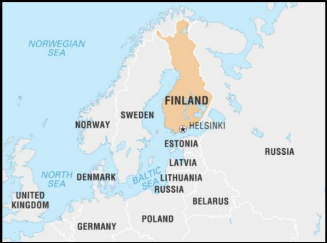
- Recently Finland’s parliament has voted to withdraw from the Ottawa Convention banning antipersonnel landmines, citing increased security threats from Russia.
About Ottawa Convention (1997)
• Purpose: Bans use, production, stockpiling, and transfer of anti-personnel landmines to protect civilians from long-term hazards.
• Adopted: Oslo, 18 September 1997; entered into force on 1 March 1999.
• Obligations: Destroy stockpiles within four years, clear mined areas, and support mine victims.
• Scope: Covers only anti-personnel mines; does not ban anti-vehicle (anti-tank) mines.
• Membership: 164 states; notable non-signatories include the US, Russia, and India.
• Landmines: Explosive devices triggered by contact or proximity; anti-personnel mines are designed to injure or kill individuals rather than vehicles.
Finland
• Northern European country; part of Nordic region; borders Russia, Sweden, Norway; coastline along Baltic Sea.
• Member of the European Union (EU) since 1995.
• Joined NATO in 2023 after Russia-Ukraine conflict.
• Known as the “Land of a Thousand Lakes” (about 1,88,000 lakes).
• Consistently ranks high in human development, education, and press freedom indices.
Gharial Conservation Efforts
Tags :
Context: –
- Seven gharial yearlings were released into the Girwa River at Katarniaghat Wildlife Sanctuary, Uttar Pradesh, to strengthen conservation efforts. Russia.
About Gharial: –
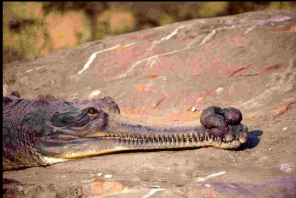
• Gharials, also known as gavials, are Asian crocodilians easily recognized by their long, thin snouts that resemble a pot (ghara in Hindi), giving them their distinctive name.• It is one of three crocodilian species found in India:
• Diet: Exclusively fish-eating (piscivorous); long, thin snout and sharp teeth ideal for catching fish.
• Habitat: Found mainly in Chambal and Girwa rivers (India), Rapti-Naryani river (Nepal).
• Threats: Dams, barrages, and water extraction degrade river habitats and reduce water flow.
• Conservation status: IUCN – Critically Endangered; Wildlife (Protection) Act, 1972 — Schedule I.
• Gharial reserves established in Uttar Pradesh, Madhya Pradesh, and Rajasthan.
Three Crocodilian Species in India:
• Gharial (Gavialis gangeticus): IUCN – Critically Endangered; found mainly in Chambal, Girwa, and some parts of Ganga River systems. • Mugger crocodile (Crocodylus palustris): IUCN – Vulnerable; widely distributed in freshwater habitats across India, including rivers, lakes, and marshes.• Saltwater crocodile (Crocodylus porosus): IUCN – Least Concern; found along the eastern coast, Andaman & Nicobar Islands, and Sundarbans.
Katarniaghat Wildlife Sanctuary
• Located in Bahraich district, Uttar Pradesh; part of Dudhwa Tiger Reserve.• Covers around 400 km²; lies along the Girwa (Gerua) river.
• Rich in wetlands, grasslands, and dense forests; important for aquatic and terrestrial biodiversity.
• Key species: Tigers (Endangered), Elephants (Endangered), Swamp Deer or Barahsingha (Vulnerable), Gangetic Dolphin (Endangered), Gharial (Critically Endangered), and Mugger crocodile (Vulnerable).
Cluster Bombs
Tags :
Context:
Iran reportedly used a cluster bomb in a missile strike on Israel, raising global concerns over civilian safety and international humanitarian law.
About:
- Also called cluster munitions; designed to release multiple smaller bombs (submunitions or bomblets) over a wide area.
• Many submunitions fail to explode on impact, remaining dangerous for years and acting like landmines.
• Can be air-dropped or ground-launched; cover large areas, making them highly destructive in populated regions.
• Submunitions target both personnel and unarmoured vehicles; some advanced types (e.g., DPICM) have dual-purpose charges.
• Humanitarian concern: indiscriminate effect and long-lasting danger to civilians.
• The 2008 Convention on Cluster Munitions (CCM) prohibits the use, development, production, acquisition, and transfer of cluster munitions.
Convention on Cluster Munitions (CCM)
• Adopted in 2008; entered into force in 2010
• Prohibits use, development, production, acquisition, and transfer of cluster munitions.
• 111 countries and 12 other entities are signatories.
• Major non-signatories: Israel, Iran, United States, Russia, China, and India.
Plan to redraw boundary of Sariska Tiger Reserve’s Critical Tiger Habitat (CTH)
Tags :
Context: –
- Rajasthan has proposed redrawing Sariska Tiger Reserve’s Critical Tiger Habitat (CTH) boundaries, potentially allowing over 50 mines to operate outside the one-kilometre no-mining zone.
About:
• Located in Alwar district, Rajasthan; part of Aravalli hills.
• Declared a tiger reserve in 1978 under Project Tiger.
• Originally a wildlife sanctuary (1955), later upgraded to national park status.
• Key species: Bengal tiger, leopard, sambar, chital, nilgai, wild boar, and many bird species.
• Major threats: mining pressures, habitat fragmentation, and human-wildlife conflict.
Critical Tiger Habitat (CTH)
• Designated under the Wildlife (Protection) Act, 1972 (amended in 2006).
• Refers to inviolate core areas within tiger reserves required for tiger conservation.
• Identified based on scientific assessment of habitat quality and tiger presence.
• Human activities like mining, grazing, and settlement are strictly prohibited.
• States are required to notify CTHs after expert consultation and with central government approval.
• The largest Critical Tiger Habitat (CTH) in India is in Nagarjunsagar-Srisailam Tiger Reserve, Andhra Pradesh and Telangana, covering over 2,500 sq km.
Jumping Gene
Tags :
Context: –
- A new study found that LINE-1, a type of jumping gene, binds to cellular DNA during short phases of cell division.
About: –
• Also called Transposable Elements; DNA sequences that can move from one location to another within the genome.
• Move either by “cut and paste” (transposition) or by copying themselves to new locations.
• Can cause mutations and alter gene expression, affecting traits and genome stability.
• In humans, over 20% of the genome consists of transposable elements.
Significance of Jumping Genes: –
• Influence gene regulation and expression, impacting development and adaptation.
• Play roles in creating genomic rearrangements, which can drive speciation.
• Can cause genetic disorders or diseases if they disrupt essential genes or regulatory regions.
• Serve as useful tools in genetic research and biotechnology for studying gene function and genome dynamics.
ULLAS
Tags :
Context: –
• Goa has become fully literate under the ULLAS – Nav Bharat Saaksharta Karyakram, marking progress toward India’s goal of full literacy by 2030.
About: –
• ULLAS stands for Understanding Lifelong Learning for All in Society.
• Centrally sponsored scheme, implemented from 2022–2027. It aims to empower adults to integrate with society and contribute to national development.
• Targets adults aged 15 years and above who missed formal schooling.
• Aligned with NEP 2020 to promote lifelong learning and social empowerment.
• Comprises five components: Foundational Literacy & Numeracy, Critical Life Skills, Basic Education, Vocational Skills, and Continuing Education.
• ULLAS app enables registration of learners and volunteers (self or via survey), and provides access to learning resources through NCERT’s DIKSHA portal.
DIKSHA Portal
Tags :
• Launched in 2017 by Ministry of Education, Government of India.
• Stands for Digital Infrastructure for Knowledge Sharing.
• Provides e-content, interactive resources, QR-coded textbooks, assessments, and teacher training materials.
• Available in multiple Indian languages; accessible via app and web.
NAVYA Initiative
Tags :
Context: –
• The Government of India launched the NAVYA initiative to provide vocational training to adolescent girls and promote women-led development.
About: –
• Stands for Nurturing Aspirations through Vocational Training for Young Adolescent Girls.
• Targets girls aged 16–18 years with at least Class 10 education, focusing on non-traditional job roles.
• Jointly implemented by Ministry of Women & Child Development (MWCD) and Ministry of Skill Development & Entrepreneurship (MSDE).
• Covers 27 districts in 19 States, including Aspirational Districts and North-Eastern states.
• Converges with schemes like PM Kaushal Vikas Yojana (PMKVY) and PM Vishwakarma Yojana for skill development.
• Supports Viksit Bharat@2047 vision, aims to build a skilled, self-reliant, and inclusive workforce, empowering adolescent girls as change agents.
Widespread Outbreak of Rice Yellow Mottle Virus (RYMV) across Africa
Tags :
Context: –
• A recent study has revealed the widespread outbreak of Rice Yellow Mottle Virus (RYMV) across Africa, posing a major threat to food security.
About: –
• A viral disease affecting rice crops, causing yellowing of leaves, stunted growth, and severe yield losses.
• First emerged in mid-1800s in Eastern Arc Mountains (present-day Tanzania), later spread widely across East and West Africa.
• Spread accelerated through unregulated seed movement, trade routes, and human activities, including colonial and wartime transport.
• Other major rice diseases include Bacterial Leaf Blight, Rice Blast, Sheath Blight, and Tungro virus, all of which significantly impact yield and food security.
Off-Grid Green Hydrogen Pilot Plant
Tags :
Context: –
• Adani Group has commissioned India’s first off-grid 5 MW green hydrogen pilot plant in Kutch, Gujarat, marking it as India’s first off-grid green hydrogen plant.
About: –
• Developed by Adani New Industries Limited (ANIL), the clean energy arm of Adani Enterprises Ltd.
• Entirely powered by solar energy, integrated with a Battery Energy Storage System (BESS), enabling fully off-grid operation.
• An off-grid green hydrogen plant produces hydrogen using renewable energy (like solar or wind) without any connection to the main power grid, relying entirely on its own generated clean energy for electrolysis.
Green Hydrogen
• Produced using renewable energy sources (solar, wind) via electrolysis.
• Generates only water vapour when used as fuel; considered the cleanest form of hydrogen.
• Hydrogen colour codes: Grey (from fossil fuels), Blue (fossil fuels + carbon capture), Green (renewable energy).
Brown Bear
Tags :
Context: –
• A Himalayan brown bear family was spotted for the first time between Nelang and Bhairon Ghati in Gangotri National Park, indicating possible range expansion and healthier ecosystem signals.
About: –
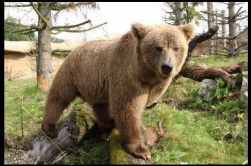
• Found at altitudes above 2,800–3,000 meters, typically in snow-covered regions and alpine meadows.
• Omnivorous diet: roots, nuts, berries, fish, and small animals — enhances survival adaptability.
• Classified as Endangered due to shrinking habitat and changing snow patterns.
Gangotri National Park:
• Located in Uttarkashi district, Uttarakhand; established in 1989.
• Source region of river Ganga (Gangotri Glacier and Gaumukh).
• Vegetation includes alpine meadows, coniferous forests, and glaciers.
• Key wildlife: snow leopard (Vulnerable), Himalayan brown bear (Endangered), musk deer (Endangered), bharal or blue sheep (Least Concern), Himalayan tahr (Near Threatened), and red fox (Least Concern).
• Important for high-altitude biodiversity conservation and forms part of the Western Himalayan alpine ecoregion.
State of the Climate in Asia 2024 Report
Tags :
Context: –
• The State of the Climate in Asia 2024 Report by WMO highlights record-breaking heat, rising sea levels, and worsening climate risks in Asia during 2024.
About: –
• Published by the World Meteorological Organization (WMO).
• Fifth annual edition focused on Asia; involves NMHSs, WMO Regional Climate Centres, UN agencies, and research institutions.
• Provides updates on key climate indicators, impacts, risks, and policy implications.
Key Findings
• 2024 was the warmest year on record in Asia (period 1850–2024).
• Every year from 2015 to 2024 ranked among the 10 warmest on record.
• Sea surface temperatures in Asia reached record highs; regional decadal warming nearly double the global average.
• Sea level rise on Pacific and Indian Ocean sides exceeded global average, threatening low-lying coastal regions.
• Extensive marine heatwaves affected most Asian ocean areas — largest extent since 1993.
• Glacier mass loss and changing surface temperatures noted as major threats to ecosystems and societies.
• Cyclone activity: Three cyclones in Bay of Bengal (Remal, Dana, Fengal), one in Arabian Sea (Asna).
• Extreme heat in Saudi Arabia’s Makkah region in June 2024, reaching 49 °C.
World Meteorological Organization (WMO):
• A specialized agency of the United Nations.
• Established in 1950, headquarters in Geneva, Switzerland.
• Evolved from the International Meteorological Organization (IMO) set up in 1873.
• Mandate: Promotes international cooperation in weather, climate, hydrology, and related geophysical sciences.
• Publishes authoritative reports like State of the Global Climate, State of the Climate in Asia, and Greenhouse Gas Bulletin.
• Has 193 member states and territories.
Centenary (100 years) celebration of conversation between Sree Narayana Guru and Mahatma Gandhi
Tags :
Context
• The Prime Minister inaugurated the centenary celebration of the historic conversation between Sree Narayana Guru and Mahatma Gandhi on 24th June 2025 in New Delhi.
About the Historic Conversation
• It took place on 12 March 1925 at Sivagiri Mutt, Kerala.
• Discussed Vaikom Satyagraha, religious conversions, non-violence, abolition of untouchability, upliftment of downtrodden, and spiritual liberation.
• Reflected shared vision of social justice, unity, and spiritual harmony.
About Sree Narayana Guru
• Social reformer and spiritual leader from Kerala.
• Advocated for “One Caste, One Religion, One God for Mankind”.
• Worked for the upliftment of marginalized communities and against caste discrimination.
About Vaikom Satyagraha
• Non-violent agitation (1924–25) for temple entry and public road access for lower castes in Vaikom, Kerala.
• Supported by Sree Narayana Guru and later by Mahatma Gandhi.
Black Mass Recovery Technology
Context
• The Technology Development Board (TDB), under DST, has funded BatX Energies, a Gurugram-based startup, to commercialize indigenous battery recycling technology using black mass recovery.
About
• Extracts valuable materials like lithium, cobalt, nickel from used lithium-ion batteries.
• Uses a dual-mode (wet and dry) process for high separation efficiency.
• Fully indigenously developed and patented; covers collection, shredding, leaching, and purification.
• Achieves 97–99% recovery rates, minimizing waste and supporting resource security.
• Reduces dependence on mining and imports, promoting sustainability and circular economy goals.
What is meant by Black Mass?
• A dark, powdery substance found in used lithium-ion batteries.
• Contains critical minerals like lithium, cobalt, nickel, manganese.
• Can be refined and reused to make new batteries, closing the materials loop.
Technology Development Board (TDB):
• Statutory body under the Department of Science & Technology (DST), Government of India.
• Established in 1996 under the Technology Development Board Act, 1995.
• Promotes development and commercialization of indigenous technology.
• Provides financial assistance (equity capital, soft loans, or grants) to industrial concerns and startups for innovative technology projects.
• Supports India’s goals of technological self-reliance and fostering a strong innovation ecosystem.
PFAS (forever chemicals)
Tags :
Context
A recent study from the Catholic University in Piacenza, Italy, discovered soil bacteria capable of breaking down PFAS (Per- and Polyfluoroalkyl Substances), raising hope for more effective environmental cleanup methods.
About PFAS (“Forever Chemicals”)
Synthetic origin: Developed in the 1940s for their water- and oil-repellent properties.
Everyday use: Common in cosmetics, non-stick cookware, food packaging, fabrics, and detergents.
Persistence: Nicknamed “forever chemicals” due to their strong carbon–fluorine bonds, making them resistant to natural degradation.
Impact: PFAS accumulate in soil, water, and living organisms, leading to long-term exposure and potential health risks such as diabetes, hormonal imbalances, and other chronic conditions.
The Registrar General of India (RGI)
Tags :
Context
• The RGI has directed states to issue birth certificates to mothers before discharge, especially in government hospitals, which account for over 50% of institutional deliveries in the country.
About
• Established in 1949 under the Ministry of Home Affairs.
• Headed by the Registrar General and Ex-Officio Census Commissioner of India, usually a Joint Secretary-level officer.
• Implements the Registration of Births and Deaths (RBD) Act, 1969, amended in 2023 (mandating online registration from October 1, 2023).
• Conducts Census of India every 10 years.
• Carries out Linguistic Survey of India (LSI) alongside the Census; first LSI completed by George Abraham Grierson in 1928.
• Manages Civil Registration System (CRS) — mandatory continuous system for recording births and deaths; enables real-time population data.
• Issues birth certificates under Section 12 of the RBD Act, 1969.
Integrated Biodiversity Assessment Tool (IBAT)
Tags :
Context
• The IBAT Alliance has announced a record $2.5 million investment in biodiversity data for 2024, signaling a major global push to strengthen conservation planning and biodiversity risk assessment.
About
• The Integrated Biodiversity Assessment Tool (IBAT) is a web-based biodiversity mapping and reporting platform launched in 2008 at the IUCN World Conservation Congress.
• Headquartered at the David Attenborough Building, Cambridge (UK).
• Supports private sector, governments, and civil society in integrating biodiversity considerations into planning and risk management.
• Used to screen biodiversity risks, prioritize conservation actions, and align with global frameworks like UN SDGs and Kunming-Montreal Global Biodiversity Framework.
• Managed by the IBAT Alliance (a coalition of BirdLife International, Conservation International, IUCN, and UNEP-WCMC).
Other Organisations
• BirdLife International: A global partnership of conservation NGOs focused on protecting birds, their habitats, and global biodiversity; known for maintaining the IUCN Red List authority for birds.
• Conservation International (CI): US-based non-profit environmental organization working globally to protect nature, advocate for sustainable development, and support community-based conservation.
• International Union for Conservation of Nature (IUCN): Founded in 1948; headquartered in Gland, Switzerland; maintains the IUCN Red List of Threatened Species and promotes nature-based solutions and global conservation policy.
• UNEP-WCMC (UN Environment Programme World Conservation Monitoring Centre): Based in Cambridge, UK; focuses on biodiversity assessment, policy support, and providing data to inform global environmental decision-making.
Kharai camel
Tags :
Context
• Despite repeated National Green Tribunal (NGT) interventions, widespread mangrove destruction in Gujarat’s Kachchh region threatens the survival of the rare, swimming Kharai camel.
About Kharai Camel
• Indigenous to: Gujarat, mainly Kachchh region.
• Name origin: From “Khara” meaning saline, highlighting its adaptation to coastal saline ecosystems.
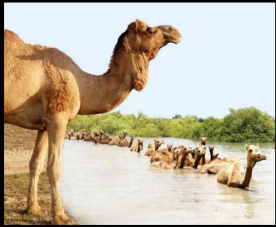
• Unique features: Can swim long distances (over 3 km at a time) to graze on mangroves; has webbed feet and strong digestion to tolerate salty vegetation.
• Habitat: Thrives in brackish water, estuarine, and mangrove ecosystems — not confined to pastures.
• Cultural significance: Integral to the Maldhari community, traditional camel herders who treat them as part of their pastoral heritage.
• Ecological role: Helps maintain mangrove health and coastal biodiversity.
• Milk properties: Nutrient-rich, therapeutic; contains antibodies similar to human milk, easier to digest, boosts immunity.
• IUCN Conservation Status: Endangered.
National Green Tribunal (NGT)
• Established in 2010 under the National Green Tribunal Act, 2010.
• Specialized judicial body to handle environmental protection and conservation of forests and other natural resources.
• Ensures enforcement of legal rights related to the environment and provides speedy environmental justice.
• Headquarters: New Delhi; regional benches in Bhopal, Pune, Kolkata, Chennai.
• Not bound by the Code of Civil Procedure; follows principles of natural justice.
Global Peace Index (GPI) 2025
Tags :
• Published by the Institute for Economics and Peace (IEP).
• Measures peacefulness across 163 countries based on indicators like levels of violence, militarization, and societal safety.
• India’s rank: 115th with a score of 2.229; improved from 116 in 2024.
• India ranks ahead of Bangladesh (123), Pakistan (144), and Afghanistan (158).
• Most peaceful countries: Iceland (1), Ireland (2), New Zealand (3).
• Least peaceful countries: Russia (163), Ukraine (162), Sudan (161).
• Global trend: Overall peacefulness declined by 0.36% in 2025; highest deterioration since World War II.
• India showed improvements in nine indicators; remains in South Asia — the second least peaceful region.
Global Liveability Index 2025
Tags :
• Published by the Economist Intelligence Unit (EIU).
• Ranks 173 cities based on stability, healthcare, culture & environment, education, and infrastructure.
• Top city: Copenhagen, Denmark, scored 98; noted for perfect scores in stability, education, and infrastructure.
• Only Asian city in top 10: Osaka, Japan.
• Bottom city: Damascus, Syria; continues to be the least liveable due to conflict and instability.
• Other lowest-ranked cities include Tripoli (Libya), Dhaka (Bangladesh), Karachi (Pakistan), Algiers (Algeria), and Lagos (Nigeria).
• Global average liveability score: 76.1 (same as 2024).
• India’s Position: Both Delhi and Mumbai ranked 141st out of 173 cities, highlighting ongoing challenges in healthcare, infrastructure, air quality, and public safety.
K-6 Missile
Tags :
Context: –
• India is developing the K-6 hypersonic submarine-launched ballistic missile (SLBM) to strengthen its strategic deterrence and enhance naval capabilities.
About: –
• Nuclear-capable SLBM under development by DRDO’s Advanced Naval Systems Laboratory, Hyderabad.
• Specifically designed for future S-5 class SSBNs (nuclear-powered ballistic missile submarines), larger and more advanced than Arihant class.
• Range: ~8,000 km, significantly extending India’s sea-based nuclear strike reach.
• Speed: Hypersonic, up to Mach 7.5 (~9,261 km/h), reducing enemy response time and making interception nearly impossible.
• Features MIRV capability (can carry and deploy multiple warheads at different targets).
• Can carry both nuclear and conventional warheads, offering strategic flexibility.
• Follows earlier K-series missiles: K-3 (1,000–2,000 km), K-4 (3,500 km), K-5 (5,000–6,000 km).
Secondary Pollutants
Tags :
Context
• A study by the Centre for Research on Energy and Clean Air (CREA) revealed that secondary pollutants, especially ammonium sulphate, account for nearly one-third of India’s PM2.5 pollution.
About Secondary Pollutants
• Form in the atmosphere through chemical reactions, not emitted directly from a source.
• Primary pollutants (like NOx, SO2, VOCs) react with other atmospheric components to form secondary pollutants.
• Examples: Ozone (O₃), secondary organic aerosols (haze), ammonium sulphate, and photochemical smog.
• Difficult to control because they form under varying atmospheric conditions.
• Major contributor to problems like photochemical smog, which results from reactions involving sunlight, leading to harmful yellowish clouds.
• Impact human health, visibility, and contribute significantly to PM2.5 levels.
Estimates Committee
Tags :
Context.
• The Estimates Committee has completed 75 years since its establishment.
About
• Constituted in 1950 on the recommendation of the John Mathai Committee, after being suggested in the first Lok Sabha.
• Largest parliamentary committee; consists of 30 members, all from Lok Sabha (no Rajya Sabha members).
• Members are elected annually by Lok Sabha from among its members, based on proportional representation.
• Main function: Examines how funds authorized by Parliament are being spent, suggests economies and improvements in organization and efficiency.
• Often referred to as a “continuous economy committee” as it works throughout the year.