
July 3'rd Week
Print PDF
Nominated members of Rajya Sabha
Tags :
Context:
• On July 13, 2025, President Droupadi Murmu, exercising powers under Article 80(1)(a) and 80(3) of the Constitution, nominated four eminent individuals to the Rajya Sabha.
Constitutional Provisions for Rajya Sabha Nominations:
• Article 80(1)(a): Empowers the President to nominate 12 members to the Rajya Sabha.
• Article 80(3): Such members are selected for their special knowledge or practical experience in literature, science, art, or social service.
• Nominations are non-electoral and made by the President on the advice of the Council of Ministers.
• The provision for nominated members in Rajya Sabha is inspired by the Irish Constitution.
Three-day national seminar (13– 15 July 2025) to mark Sushruta Jayanti
Tags :
Context (PIB):
• The All-India Institute of Ayurveda (AIIA), New Delhi is hosted Shalyacon 2025, a three-day national seminar (13–15 July 2025) to mark Sushruta Jayanti (15th July).
About Sushruta and his contributions:
• Acharya Sushruta (~600 BCE): Known as the Father of Surgery; compiled the Sushruta Samhita, a key text on ancient surgical science.
• Sushruta Samhita is associated with the Atharva Veda tradition.
• It describes advanced surgical procedures like cataract removal, caesarean section, bone setting, and plastic surgery.
• Ashtavidha Shastra Karma refers to eight fundamental surgical procedures described in Ayurveda, particularly in the Sushruta Samhita.
• Ashtavidha Shastra Karma – 8 types of surgical procedures: Chedya (excision), Bhedya (incision), Lekhya (scraping), Vedhya (puncturing), Eshya (probing), Aharanya (extracting), Vsraya (draining), and Sivya (suturing).
• Sushruta Samhita translated into Arabic (Kitab-i-Susrud) during the Abbasid Caliphate (8th century CE).
Other Notable Personalities associated with Ayurveda in Ancient India:
Charaka
• ~800 BCE (Later Vedic period)
• Author of Charaka Samhita
• Focus: Kaya Chikitsa (Internal medicine)
• Detailed diagnosis, prognosis, treatment methods
• Elaborated Tridosha theory (Vata, Pitta, Kapha)Vagbhata
• Author of Ashtanga Hridayam and Ashtanga Sangraha
• Synthesized Charaka’s medicine and Sushruta’s surgery
• Language: Sanskrit (Hridayam), Sanskrit + Prakrit (Sangraha)
• Presented Ayurveda in simple verses for memorization
• Helped spread Ayurveda to South-East Asia
Flue Gas Desulphurisation (FGD)
Tags :
Context:
• The Environment Ministry has eased norms for installing Flue Gas Desulphurisation (FGD) systems in Thermal Power Plants.
About:
• A scrubbing technique using an alkaline reagent (usually sodium- or calcium-based) to remove Sulphur Dioxide (SO₂) from flue gas.
• Flue gas is a byproduct of fossil fuel combustion, containing pollutants like CO₂, SO₂, NOx, and particulate matter.
• FGD units specifically target SO₂ emissions in flue gas.
• SO₂ is an acidic gas that is neutralised with a basic compound in the FGD unit.
• Three main types of FGD systems are used: Dry Sorbent Injection, Wet Limestone Treatment, and Seawater Treatment.
Sulphur Dioxide as a Pollutant:
• SO₂ exposure can cause respiratory problems such as bronchitis.
• It contributes to acid rain affecting soil and water ecosystems.
• Major sources include fossil fuel burning by power plants and industrial facilities.
• Other sources include industrial metal extraction and natural emissions from volcanoes.
Appointment of Governor
Tags :
Context:
• Recently, the President appointed Kavinder Gupta as Lieutenant Governor of Ladakh, Ashim Kumar Ghosh as Governor of Haryana, and P. Ashok Gajapathi Raju as Governor of Goa.
About:
• The Governor is appointed by the President of India under Article 155 of the Constitution.
• The appointment is made on the advice of the Union Council of Ministers, particularly the Prime Minister.
• Article 156(1): Governor holds office during the pleasure of the President.
• Tenure: Normally 5 years but can be removed earlier or transferred.
• Same person can be appointed as Governor for two or more states (Article 153).
• Provision for appointing state governors by the central government was borrowed from the Canadian Constitution.
Qualifications (Article 157 & 158):
• Must be a citizen of India.
• Must have completed 35 years of age.
• Should not be a member of Parliament or State Legislature (if such, deemed resigned).
• Should not hold any office of profit.
One District One Product (ODOP) Scheme
Tags :
Context:
• The 2nd edition of the One District One Product (ODOP) Awards was announced by the Department for Promotion of Industry and Internal Trade (DPIIT), Ministry of Commerce & Industry.
About One District One Product (ODOP) scheme
• A Central Government initiative aimed at promoting products that are unique to each district in India.
• It is under the Department for Promotion of Industry and Internal Trade (DPIIT), Ministry of Commerce and Industry.
• Objective is to boost manufacturing, market access, and exports of identified products.
• Implemented through convergence of central and state schemes.
• Products range from handicrafts, handlooms, agricultural products, processed foods, to industrial goods.
• Linked with PM Formalisation of Micro Food Processing Enterprises (PMFME) scheme for capacity building and credit support.
• Facilitates participation of ODOP products in national and international trade fairs.
PM Formalisation of Micro Food Processing Enterprises (PMFME) scheme
• PMFME scheme, is a centrally sponsored scheme launched by the Ministry of Food Processing Industries (MoFPI) under the Aatmanirbhar Bharat Abhiyan.
• Its primary goal is to enhance the competitiveness of existing individual micro-enterprises in the unorganized food processing sector in India.
• The scheme aims to achieve this by providing financial, technical, and business support for the upgradation of existing and new micro food processing units.
National Pharmaceutical Pricing Authority (NPPA)
Tags :
Context:
• The Centre has fixed prices of 71 key drug formulations through the National Pharmaceutical Pricing Authority (NPPA).
About:
• Independent regulator under the Department of Pharmaceuticals, Ministry of Chemicals & Fertilizers.
• Established in 1997 to implement and enforce the provisions of the Drugs (Prices Control) Order (DPCO).
• Responsible for fixing/revising prices of scheduled drugs and monitoring prices of non-scheduled drugs.
• Ensures availability of medicines at affordable prices while maintaining supply.
• Advises the government on issues related to drug pricing policy.
• Functions are in line with the Essential Commodities Act, 1955.
Scheduled vs Non-scheduled drugs
| Aspect | Scheduled Drugs | Non‑scheduled Drugs |
|---|---|---|
| Definition | Drugs listed in Schedule‑I of the Drugs (Prices Control) Order (DPCO). | Drugs not listed in Schedule‑I of the DPCO. |
| Price Control | Prices are fixed/revised by NPPA. | Prices are not fixed by NPPA but are monitored. |
| Objective | To ensure essential medicines are affordable and accessible. | To prevent excessive price increase beyond permissible limits. |
| Price Increase Limit | As per government’s set price; manufacturers cannot exceed it. | Annual increase allowed up to 10% in a 12‑month period. |
| Examples | Life‑saving drugs, essential antibiotics, anti‑cancer medicines. | Most branded formulations outside essential drug list. |
Behdeinkhlam Festival
Tags :
Context:
• The sacred Behdeinkhlam Festival was celebrated in Meghalaya.
About:
• Name means “driving away the plague”, symbolising spiritual cleansing and community resilience.
• Most important dance festival of the Pnars (Jaintias).
• Celebrated annually in July after the sowing season.
• Involves young men symbolically driving away evil spirits, plague, and disease by beating the roof of each house with bamboo poles.
RhoDIS India Programme
Tags :
Context:
• A specialised team has begun genetic analysis of 2,573 rhino horn samples, which will be added to the RhoDIS India DNA data library.
About:
• Launched in 2016 by MoEFCC in partnership with Wildlife Institute of India (WII), forest departments of Assam, West Bengal, Uttar Pradesh, and WWF India.
• RhoDIS = Rhino DNA Index System – a wildlife forensics tool developed to investigate wildlife crime cases involving rhinos.
• Uses DNA indexing to create a unique genetic signature for each individual rhino.
8.1 Indian Rhino
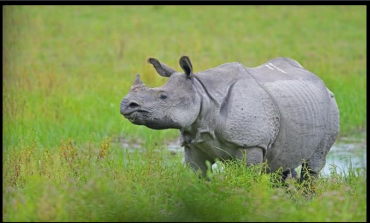
• Commonly known as the Greater One-Horned Rhinoceros.
• Scientific Name: Rhinoceros unicornis
• Found mainly in India and Nepal.
• Habitat: Alluvial grasslands, riverine forests, and swampy areas.
• Major Indian Habitats: Kaziranga, Pobitora, Orang, Manas National Parks
• IUCN Conservation Status: Vulnerable
Other notable Rhino Species:
• White rhino – Northern and Southern Africa (Near Threatened)
• Black rhino – Eastern and Southern Africa (Critically Endangered)
• Javan rhino – also called Sunda rhino or lesser one-horned rhino (Java, Indonesia) (Critically Endangered)
• Sumatran rhino – Sumatra Island, Indonesia (Critically Endangered)
8.2 Wildlife Institute of India (WII)
• Established: 1982
• Location: Dehradun, Uttarakhand
• Type: Autonomous institution under the Ministry of Environment, Forest and Climate Change (MoEFCC).
• Primary Role: Research, training, and capacity building in wildlife conservation and management.
Functions:
• Conducts wildlife research in areas like biodiversity, endangered species, habitat ecology, and climate change.
• Provides training to forest and wildlife managers, scientists, and researchers.
• Offers advisory services to the government on wildlife policies and management strategies.
• Engages in wildlife forensics and assists in legal wildlife crime investigations.
Carbon Fibre
Tags :
Context:
• Recently, the first ‘Make in India’ cost-effective advanced carbon fibre foot prosthesis, indigenously designed and developed by Defence Research and Development Laboratory (DRDL) and AIIMS-Bibinagar, was unveiled.
About:
• A strong, lightweight material made from thin strands of carbon atoms bound together in a crystalline structure.
• Typically combined with resins or polymers to form carbon fibre-reinforced composites.
• Properties include: High strength-to-weight ratio, High tensile strength, High stiffness, and Low thermal expansion.
• Uses: Aerospace, defence, sports equipment, automotive, medical prosthetics, wind turbine blades.
• Advantages over metals: Lighter yet stronger, fatigue-resistant, and adaptable to complex shapes.
• Limitations: Expensive production process, brittle nature compared to metals.
Cabo Delgado
Tags :
Context:
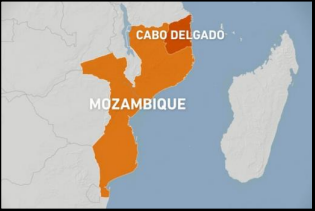
• A recent study found that four proposed Liquefied Natural Gas (LNG) projects in Mozambique’s Cabo Delgado region could consume at least 17% of the world’s remaining carbon budget.
About:
• Province in the northernmost part of Mozambique, located along the Indian Ocean coast.
• Capital: Pemba.
• Rich in offshore natural gas reserves, especially in the Rovuma Basin.
• Hosts major LNG projects led by multinational companies.
• Also known for significant ruby and other mineral deposits.
• Has faced insurgency and armed conflict since 2017, involving extremist groups.
• Strategically important for Mozambique’s economy due to energy export potential.
• Ecologically rich with coastal and marine biodiversity but threatened by climate change and resource exploitation.
Kaziranga Releases First Grassland Bird Survey Report
Tags :
Context:
• Recently, Kaziranga National Park released its first Grassland Bird Survey Report, aimed at conserving grassland-dependent bird species of the Brahmaputra floodplains.
About the survey:
• Species Count: 43 grassland bird species recorded across Eastern Assam, Biswanath, and Nagaon wildlife divisions.
• The survey prioritised 10 species that are either globally threatened or endemic to the Brahmaputra floodplains.
• The prioritised species are: Bengal Florican (Critically Endangered), Swamp Francolin (Vulnerable), Finn’s Weaver (Endangered), Swamp Grass Babbler (Endangered), Jerdon’s Babbler (Vulnerable), Slender-billed Babbler (Vulnerable), Black-breasted Parrotbill (Vulnerable), Marsh Babbler (Vulnerable), Bristled Grassbird (Vulnerable), Indian Grassbird (Vulnerable).
• The use of passive acoustic recording monitoring was the highlight of the survey.
Passive Acoustic Recording Monitoring (PARM) Technology
• Non-invasive method to monitor wildlife/environmental sounds.
• Uses hydrophones (underwater) or microphones (terrestrial).
• Records ambient natural sounds without emitting signals.
• Applications: marine mammal monitoring, bird/amphibian surveys, biodiversity studies, anti-poaching, habitat change tracking.
• Advantages: continuous long-term monitoring, minimal disturbance, access to remote areas.
Kaziranga National Park – Assam
• Location – Assam, along Brahmaputra River.
• UNESCO World Heritage Site – Inscribed in 1985.
• Established – 1905 as reserve forest; declared NP in 1974.
• Famous For – Largest population of Indian one-horned rhinoceros (Rhinoceros unicornis).
• Other Fauna – Tiger (Endangered) (Tiger Reserve since 2006), swamp deer (Vulnerable), wild water buffalo (Endangered), elephants (Endangered), hog deer (Least Concern).
• Birdlife – Important Bird Area (IBA) – migratory birds like pelicans, storks, herons.
Swachh Survekshan 2024-25 Awards
Tags :
Context:
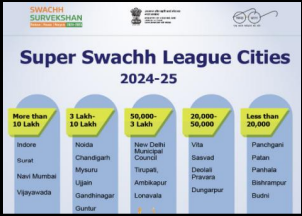
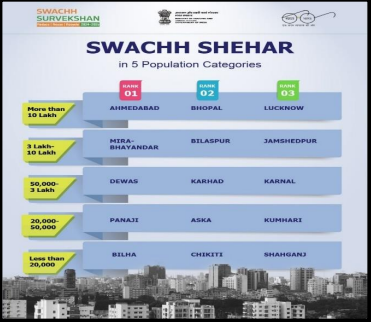
• Recently, Hon’ble President of India, Smt. Droupadi Murmu, conferred the Swachh Survekshan 2024-25 Awards at Vigyan Bhawan, New Delhi, in an event hosted by the Ministry of Housing and Urban Affairs (MoHUA).
About:
• Total Awards: 43 national awards, with special recognition for Mahakumbh.
• Following the “One City, One Award” principle, 34 cities were recognized as Promising Swachh Shehars.
• Launched Swachh City Partnership initiative – top 78 performing cities to mentor one low-performing city each.
• Announced Accelerated Dumpsite Remediation Programme (1-year, starting 15 Aug 2025) to fast-track legacy waste clearance and increase scientific waste processing capacity.
About Swachh Survekshan Awards:
• Conducted as part of the Swachh Bharat Mission (Urban) since 2016.
• Ranks cities, towns, and States/UTs based on cleanliness indicators and citizen feedback.
• Evaluates solid waste management, sanitation sustainability, and public participation.
ADEETIE Scheme
Tags :
Context:
• The Assistance in Deploying Energy Efficient Technologies in Industries & Establishments (ADEETIE) Scheme was officially launched by the Union Ministry of Power.
About:
• Flagship initiative of the Bureau of Energy Efficiency (BEE) under the Ministry of Power.
• Aims to promote energy-efficient technologies among MSMEs, enhancing competitiveness and contributing to India’s climate goals.
• Duration: 3 years (FY 2025-26 to FY 2027-28).
• Financial Support: Interest subvention – 5% for Micro & Small Enterprises, 3% for Medium Enterprises on loans for adopting energy-efficient technologies.
• Technical Support: End-to-end assistance, including energy audits, technology identification, and monitoring of implementation.
Eligibility for availing benefits under this scheme
• Must be Udyam-registered MSMEs.
• Should belong to one of the 14 energy-intensive sectors: Brass, Bricks, Ceramics, Chemicals, Fishery, Food Processing, Forging, Foundry, Glass, Leather, Paper, Pharma, Steel Re-rolling, and Textiles.
• Entities must demonstrate a minimum of 10% energy savings from the implemented technologies.
Bureau of Energy Efficiency (BEE)
• Established – 2002 under the Energy Conservation Act, 2001.
• Nodal Ministry – Ministry of Power.
• Headquarters – New Delhi.
• It helps to develop policies & strategies for energy efficiency in India.
Key Programmes under BEE
• Standards & Labelling Programme – Energy Star rating for appliances.
• Perform, Achieve and Trade (PAT) – Market-based mechanism to improve industrial energy efficiency.
• Market Transformation for Energy Efficiency (MTEE) – Promotion of energy-efficient appliances.
• State Energy Efficiency Index.
Prime Minister Dhan-Dhaanya Krishi Yojana (PMDDKY)
Tags :
Context:
• The Cabinet has approved the Prime Minister Dhan-Dhaanya Krishi Yojana (PMDDKY).
About:
• Approved on July 16, 2025, targeting 100 low-performing Agri-districts.
• Annual outlay: ₹24,000 crore for 6 years.
• Aims to enhance productivity, promote crop diversification, improve irrigation and storage, and ensure credit access.
• Focus exclusively on agriculture and allied activities.
• Ensures saturation-based convergence of 36 schemes from 11 ministries, directly benefiting 1.7 crore farmers.
• District-level plans to be prepared by district collectors with support from agricultural universities and NITI Aayog.
• Digital dashboard, farmer app, and district ranking system to ensure transparency, access, and accountability.
Mitochondrial Replacement Therapy (MRT)
Tags :
Context:
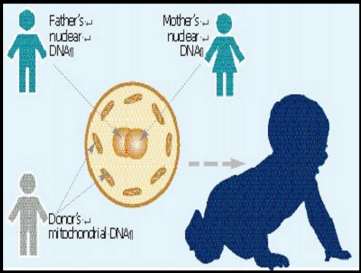
• A new clinical trial successfully protected eight babies at high risk of inheriting mitochondrial diseases from their mothers through mitochondrial donation, also known as Mitochondrial Replacement Therapy (MRT).
About:
• A reproductive technology used to prevent the transmission of mitochondrial diseases from mother to child.
• Involves replacing defective mitochondria in the mother’s egg with healthy mitochondria from a donor egg.
• The resulting embryo contains:
Nuclear DNA from the intended mother and father
Healthy mitochondrial DNA from a donor woman
• Often called a “three-parent baby” technique due to DNA contribution from three individuals.
• Goal: Prevent disorders affecting organs with high energy demand (e.g., brain, heart, muscles).
Methods used for MRT:
• Maternal Spindle Transfer (MST) – replacement before fertilisation.
• Pronuclear Transfer (PNT) – replacement after fertilisation.
Mitochondrial Diseases:
• Leigh Syndrome – severe neurological disorder.
• MELAS (Mitochondrial Encephalomyopathy, Lactic Acidosis, and Stroke-like episodes).
• LHON (Leber’s Hereditary Optic Neuropathy) – vision loss.
• MERRF (Myoclonic Epilepsy with Ragged-Red Fibers).
Global Findex 2025
Tags :
ontext:
• The World Bank released the Global Findex 2025 report, showcasing progress in digital and financial inclusion.
India-Specific Highlights:
• Account ownership is at or near 90%.
• 16% of account owners have inactive accounts (compared to 4% average in other low- and middle-income economies).
• Share of women and men with only inactive accounts declined between 2021 and 2024.
World Bank
• Established in 1944 during the Bretton Woods Conference.
• Headquarters: Washington, D.C., USA.
• Members: 189 countries (India is a founding member).
• Comprises International Bank for Reconstruction and Development (IBRD) (lends to middle-income/creditworthy low-income countries) and International Development Association (IDA) (gives concessional loans/grants to poorest countries).
• Provides loans, grants, technical assistance, and policy advice.
• Governed by a Board of Governors and Board of Executive Directors.
• Funded through member contributions and international market borrowings.
• Publishes reports like World Development Report, Global Economic Prospects, and Global Findex.
Netra MkII - Next-generation Airborne Early Warning and Control System (AWACS)
Tags :
Context:
• The government has approved the production of the next-generation Airborne Early Warning and Control System (AWACS) India programme, also known as Netra MkII.
About:
• Will be mounted on the Airbus A321 platform.
• Designed to detect, track, and monitor threats over vast distances.
• Functions as a flying command centre, enhancing national surveillance capabilities.
• Equipped with Active Electronically Scanned Array (AESA) radars and mission control systems.
Banni Grassland in Gujarat Ready for Cheetah Reintroduction
Tags :
• Located on the southern edge of the Rann of Kutch, Gujarat.
• Comprises arid grassland ecosystem with seasonal wetlands.
• Home to nomadic pastoral communities like the Maldharis.
• Rich in wildlife – supports species such as chinkara, nilgai, desert fox, and various migratory birds.
• Known for Banni buffalo, a hardy indigenous breed.
• Faces ecological threats from Prosopis juliflora (invasive species), overgrazing, and climate change.
• Plays a crucial role in livelihood security and ecological balance in arid Kutch.
Glass Grid Rapid Technology
Tags :
Context:
• The National Highways Authority of India (NHAI) has tested Glass Grid Rapid Technology, developed by IIT Madras, on the Bengaluru–Chennai Expressway to prevent cracks.
About:
• Innovative road construction technology using glass fibre grids.
• Placed between asphalt layers to provide reinforcement and distribute load.
• Helps prevent cracks caused by thermal expansion, contraction, and heavy traffic.
• Enhances durability and lifespan of roads.
• Allows for rapid construction while maintaining strength.
• Aims to reduce maintenance costs and improve pavement performance.
European Free Trade Association (EFTA)
Tags :
Context:
• India’s Free Trade Agreement (FTA) with the four-nation European bloc, EFTA, will come into effect from 1st October, as announced by the Union Minister of Commerce and Industry.
About:
• Formed in 1960 through the Stockholm Convention as an alternative to the European Economic Community.
• Works to encourage free trade and deeper economic integration among members and globally.
• Original members included Austria, Denmark, Norway, Portugal, Sweden, Switzerland, and the UK.
• Later expansions saw Iceland join in 1970, Finland in 1986, and Liechtenstein in 1991.
• Several members left after joining the European Union — Denmark and the UK (1973), Portugal (1986), and Austria, Finland, Sweden (1995).
• Current membership: Iceland, Liechtenstein, Norway, Switzerland.